

Iran War Bets Turned Polymarket and Kalshi into the Next Fight Over What People Should Be Allowed to Trade
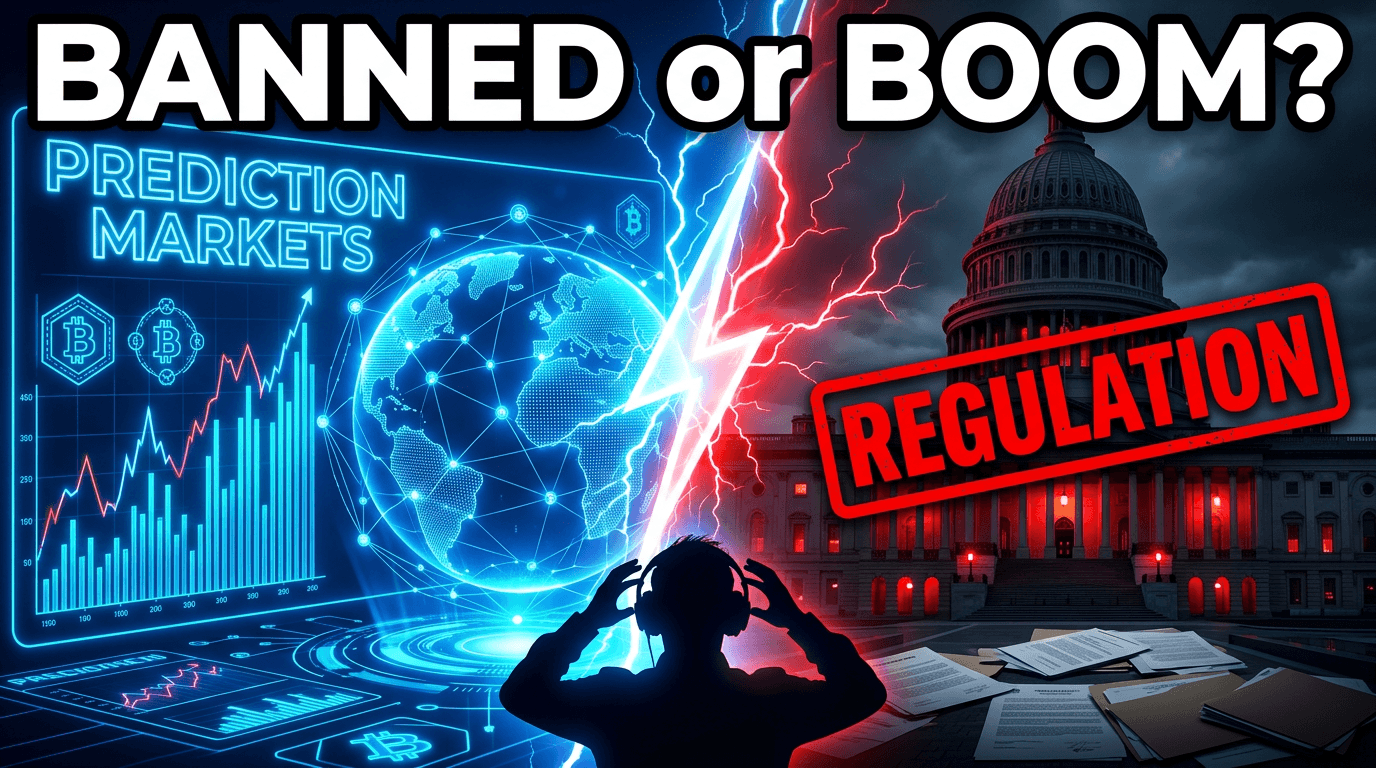
✔The digital asset landscape is a constant frontier, pushing the boundaries of technology, finance, and societal norms. Few areas encapsulate this dynamic tension as vividly as prediction markets, and at the forefront of this evolution are platforms like Polymarket and Kalshi. These innovative ventures, fueled by ambitious fundraising rounds that could see them valued at a staggering $20 billion each, are not merely redefining how we speculate on future events; they are fundamentally challenging established paradigms and sparking a heated debate about the very nature of tradeable assets. The recent focus on “Iran war bets” has cast a spotlight on these platforms, turning them into a crucible where Washington’s regulatory ambitions clash with the relentless innovation of Web3.
✔This isn’t just about market speculation; it’s about the aggregation of information, the democratization of forecasting, and the profound implications for everything from financial innovation to national security. As the traditional financial world grapples with the decentralized, often permissionless nature of blockchain, the saga of Polymarket and Kalshi serves as a potent case study in the ongoing battle to define the future of digital finance. Understanding this “fight over what people should be allowed to trade” is crucial for business professionals, entrepreneurs, and crypto enthusiasts alike, as it offers a glimpse into the regulatory hurdles and transformative potential of the next wave of digital disruption.
🔑Key Takeaways
- Prediction markets like Polymarket and Kalshi are rapidly growing, driven by their ability to aggregate information and provide accurate forecasts, attracting significant investor interest.
- The platforms face intense ethical and regulatory scrutiny, particularly regarding “Iran war bets,” raising concerns about public morality, market manipulation, and the classification of assets.
- Blockchain technology underpins decentralized prediction markets, offering transparency, immutability, and censorship resistance, but also posing significant challenges for traditional regulatory models.
- Despite regulatory hurdles, prediction markets hold immense potential for enhancing business forecasting, driving digital transformation, and fostering new forms of financial innovation and risk management.
- The future success of prediction markets depends on establishing clear regulatory frameworks, implementing industry self-regulation, continued technological evolution, and public education.
📑Table of Contents
- The Rise of Prediction Markets: Information Aggregation Meets Digital Innovation
- The Ethical Minefield and Regulatory Gauntlet: Why Washington is Cracking Down
- Blockchain, Decentralization, and the Future of Forecasting
- Connecting Prediction Markets to Business Efficiency and Financial Innovation
- The Path Forward: Balancing Innovation with Responsibility
- FAQ Section
- Conclusion
✅The Rise of Prediction Markets: Information Aggregation Meets Digital Innovation
◻Prediction markets, at their core, are exchanges where individuals can trade shares representing the probability of future events. Unlike traditional gambling, which often focuses on entertainment and chance, prediction markets aim to aggregate dispersed information and produce accurate forecasts. By allowing participants to buy and sell contracts based on their beliefs about an outcome, these markets create a real-time, incentivized system for collective intelligence. If a contract for “Event X will happen” trades at $0.70, it implies a 70% perceived probability of that event occurring.
Polymarket, operating on a decentralized blockchain infrastructure, exemplifies the cutting edge of this concept. It allows users to bet on a vast array of topics, from political outcomes and economic indicators to scientific breakthroughs and cultural phenomena. Its blockchain foundation offers transparency, immutability, and resistance to censorship, aligning with the core tenets of Web3. Kalshi, while also an event-based exchange, operates within a more traditional, regulated framework, highlighting a key divergence in the industry’s approach to market design and compliance. Both, however, share the fundamental goal of allowing participants to monetize their foresight and contribute to a more accurate collective understanding of the future.
➖The allure for investors, driving those $20 billion valuation talks, lies in several factors:
- Unique Data Source: Prediction markets can generate highly accurate forecasts, often outperforming traditional polling or expert opinions, especially for complex or uncertain events. This data has immense value for businesses, researchers, and policymakers.
- Scalability: Blockchain technology allows for global, permissionless participation, opening up a vast user base.
- Disruption Potential: These platforms challenge the gatekeepers of information and traditional financial instruments, offering new ways to hedge risk and speculate.
- Technological Innovation: They represent a tangible application of blockchain’s power to create novel market structures.
➡Expert Take:
“Prediction markets, particularly those leveraging blockchain, represent a paradigm shift in how we process information and forecast future events. They offer an unfiltered, incentivized aggregation of collective wisdom that can often surpass traditional analytical methods. The challenge lies in harmonizing this incredible potential with robust regulatory frameworks that protect participants without stifling innovation.” – Dr. Evelyn Reed, Lead Analyst, Decentralized Finance Institute
✅The Ethical Minefield and Regulatory Gauntlet: Why Washington is Cracking Down
The emergence of “Iran war bets” on platforms like Polymarket, which allow users to wager on geopolitical conflicts, pushed prediction markets from the fringes of financial innovation into the center of a profound ethical and regulatory debate. The idea of profiting from human suffering or conflict triggers strong moral objections, raising questions about the appropriate boundaries of speculative markets. While proponents argue that such markets merely aggregate existing beliefs and could even provide valuable intelligence, critics contend they normalize and incentivize morbid speculation.
➖Washington’s increasing scrutiny, evidenced by the move towards “writing new rules,” stems from several concerns:
- Public Morality and Ethics: Markets on sensitive topics like wars, assassinations, or terrorist attacks are widely seen as repugnant and can erode public trust in financial systems.
- Market Manipulation: Concerns exist that large financial interests could attempt to manipulate outcomes or spread misinformation to influence market prices, potentially impacting real-world events or public sentiment.
- Regulatory Arbitrage: Decentralized platforms like Polymarket operate globally, often outside the direct purview of any single national regulator. This creates a “wild west” scenario where traditional financial laws may not apply, leading to consumer protection risks and challenges for law enforcement.
- Classification of Assets: Regulators like the CFTC (Commodity Futures Trading Commission) and SEC (Securities and Exchange Commission) are grappling with how to classify prediction market contracts. Are they derivatives, commodities, securities, or simply games of chance? The legal classification dictates which regulatory body has jurisdiction and what rules apply. Kalshi, for instance, has successfully registered with the CFTC as a designated contract market, allowing it to offer event contracts on a predefined set of topics. However, the scope of what is permissible even for regulated entities is under intense review.
- National Security Implications: In an era of increasing geopolitical instability, governments are highly sensitive to any financial instrument that could potentially be seen as aiding adversarial interests or creating incentives that run counter to national policy.
The “fight over what people should be allowed to trade” is therefore not merely a philosophical discussion but a practical one with significant implications for the legality and future operation of these platforms. Regulators are tasked with balancing innovation with protection, maintaining market integrity, and upholding public trust – a tightrope walk in the complex world of Web3.
✅Blockchain, Decentralization, and the Future of Forecasting
Polymarket’s utilization of blockchain technology is a critical aspect of its operation and the broader prediction market revolution. By building on decentralized infrastructure, Polymarket offers several advantages:
- Transparency: All market activity, including trades and outcomes, is recorded on a public ledger, offering unprecedented transparency and audibility.
- Immutability: Once recorded, transactions cannot be altered, ensuring the integrity of market data and outcomes.
- Censorship Resistance: Decentralized platforms are inherently more resistant to single points of failure or arbitrary shutdown by a central authority, a core tenet of Web3. This is precisely what makes them attractive to users but also a point of contention for regulators.
- Global Access: Anyone with an internet connection can participate, democratizing access to financial markets and information aggregation.
These characteristics are not just technical features; they are foundational principles of digital transformation. They speak to a future where financial services are more open, accessible, and resilient. However, these very strengths also complicate regulatory oversight. How do you regulate a market that has no single physical headquarters and is governed by smart contracts? This is the core dilemma facing Washington and regulators worldwide.
➡Expert Take:
“The decentralized nature of platforms like Polymarket is both their greatest strength and their biggest regulatory hurdle. While offering unparalleled transparency and censorship resistance, it challenges traditional jurisdictional models. The future will likely see a blend of on-chain innovation and off-chain regulatory compliance, a complex dance between emergent tech and established governance.” – Professor Alan Wu, Blockchain Policy Researcher, Institute for Future Technologies
✅Connecting Prediction Markets to Business Efficiency and Financial Innovation
Despite the regulatory headwinds and ethical debates, the underlying technology and principles of prediction markets hold immense potential for business efficiency, digital transformation, and financial innovation.
1. Enhanced Business Forecasting and Strategic Planning
Imagine a world where businesses could tap into a truly global, incentivized network of collective intelligence to forecast key market trends, project product success, or anticipate geopolitical shifts affecting supply chains. Prediction markets offer:
- Superior Accuracy: Research suggests these markets often outperform expert panels and traditional forecasting methods, especially for events with high uncertainty.
- Diverse Perspectives: They aggregate insights from a broad spectrum of individuals, reducing bias inherent in small expert groups.
- Real-time Insights: Prices in prediction markets update continuously, providing immediate feedback on shifts in collective belief.
For large corporations, this could translate into more accurate sales forecasts, better resource allocation, and proactive risk management strategies. For example, a tech company could launch an internal prediction market to gauge the success of a new feature rollout, or an energy firm could use one to predict commodity price fluctuations with greater precision.
2. Digital Transformation and Data-Driven Decision Making
The data generated by prediction markets is inherently digital and granular. Integrating this probabilistic data into existing business intelligence systems can significantly enhance an organization’s digital transformation journey.
- Augmented Analytics: Companies can combine prediction market data with their own internal datasets to generate more robust predictive models.
- AI/ML Training Data: The outcomes of prediction markets, along with the price movements leading up to those outcomes, can serve as valuable training data for machine learning algorithms, refining AI’s ability to forecast complex events.
- Operational Optimization: By providing clearer probabilities of future events, operations teams can optimize inventory, logistics, and staffing, reducing waste and improving responsiveness.
3. Financial Innovation and Risk Management
Prediction markets represent a nascent but powerful form of financial innovation, creating new categories of derivatives and hedging instruments.
- New Asset Classes: They allow for the securitization of virtually any future event, creating novel investment opportunities and risk transfer mechanisms.
- Hedge Against Unquantifiable Risks: Businesses often face ‘black swan’ events or highly uncertain geopolitical risks that are difficult to hedge using traditional financial products. Prediction markets could offer a way to create bespoke contracts against such risks.
- Decentralized Finance (DeFi) Integration: On-chain prediction markets can be integrated with other DeFi protocols, enabling automated hedging strategies, collateralized lending based on predicted outcomes, and novel insurance products. This represents a significant step towards a more robust and resilient digital financial ecosystem.
4. Operational Optimization Through Collective Intelligence
The ability to aggregate diverse opinions and incentivize accurate forecasting can directly lead to operational improvements. Whether it’s predicting project completion timelines, the success rate of a new marketing campaign, or the likelihood of regulatory changes impacting a specific industry, prediction markets can provide valuable input.
- Internal Decision-Making Tools: Organizations can deploy internal prediction markets to solicit candid opinions from employees on strategic decisions, project risks, or product development paths, bypassing hierarchical biases.
- Resource Allocation: With better probabilistic forecasts, businesses can allocate capital, human resources, and development efforts more effectively, prioritizing initiatives with higher perceived success rates.
➡Expert Take:
“Beyond the headlines, prediction markets, especially when designed with clear rules and transparency, offer a tantalizing glimpse into a future of enhanced corporate foresight. Imagine internal markets forecasting project overruns or product adoption rates, or external markets providing real-time sentiment on geopolitical risks impacting supply chains. This isn’t just speculation; it’s a powerful tool for operational intelligence.” – Catherine Lee, VP of Digital Strategy, Global Consulting Group
✅The Path Forward: Balancing Innovation with Responsibility
The $20 billion valuation aspirations of Polymarket and Kalshi underscore the immense market potential seen in prediction markets. However, the controversy surrounding “Iran war bets” and Washington’s looming regulatory actions highlight the critical juncture at which this industry stands. The future of prediction markets, and by extension, a significant facet of Web3’s promise, hinges on finding a delicate balance:
- Clear Regulatory Frameworks: Governments and regulatory bodies must develop clear, forward-looking frameworks that differentiate between legitimate information aggregation and problematic speculation. This will likely involve defining permissible market topics, establishing robust KYC/AML (Know Your Customer/Anti-Money Laundering) requirements, and enforcing consumer protection.
- Industry Self-Regulation and Best Practices: Platforms themselves must proactively implement ethical guidelines, content moderation policies, and transparent dispute resolution mechanisms. Building trust will be paramount.
- Technological Evolution: Continued innovation in areas like zero-knowledge proofs could offer ways to conduct sensitive predictions while preserving privacy, potentially easing some regulatory concerns.
- Education and Public Discourse: A deeper public understanding of how prediction markets function, their potential benefits, and their inherent risks is essential to fostering a constructive dialogue rather than purely emotional reactions.
📑FAQ Section
➖Q: What are prediction markets?
A: Prediction markets are exchanges where individuals trade contracts representing the probability of future events, aggregating dispersed information to produce accurate forecasts. They differ from traditional gambling by focusing on collective intelligence and forecasting.
➖Q: Why are Polymarket and Kalshi controversial?
A: They are controversial due to ethical concerns over “Iran war bets“ and other sensitive topics, regulatory challenges related to asset classification and decentralized operations, and potential national security implications. Regulators are grappling with how to oversee these innovative platforms.
➖Q: How does blockchain impact prediction markets?
A: Blockchain technology provides transparency, immutability, censorship resistance, and global access to decentralized prediction markets. However, these very strengths also complicate traditional regulatory oversight by challenging existing jurisdictional models.
➖Q: What are the business benefits of prediction markets?
A: Prediction markets can offer enhanced business forecasting (often more accurate than traditional methods), drive data-driven decision-making, foster financial innovation and risk management (creating new hedging instruments), and optimize operations through collective intelligence by gathering diverse opinions.
➖Q: What is the main challenge facing prediction markets?
A: The main challenge is finding a balance between fostering technological innovation and implementing robust, forward-looking regulatory frameworks. These frameworks must protect participants, maintain market integrity, address ethical concerns, and define permissible market topics without stifling the transformative potential of these platforms.
💡Conclusion | The “fight over what people should be allowed to trade” is more than just a regulatory skirmish; it’s a foundational debate about the limits of free markets, the power of collective intelligence, and the ethical implications of financial innovation in the digital age. For business leaders and entrepreneurs, monitoring this space is not just about keeping abreast of crypto trends; it’s about understanding the evolving landscape of information, risk, and value creation in a world increasingly shaped by decentralized technologies. The lessons learned from Polymarket and Kalshi will undoubtedly inform how we approach digital transformation, financial innovation, and operational optimization across industries for decades to come. The future of forecasting is here, and navigating its complexities responsibly will be key to unlocking its full potential.